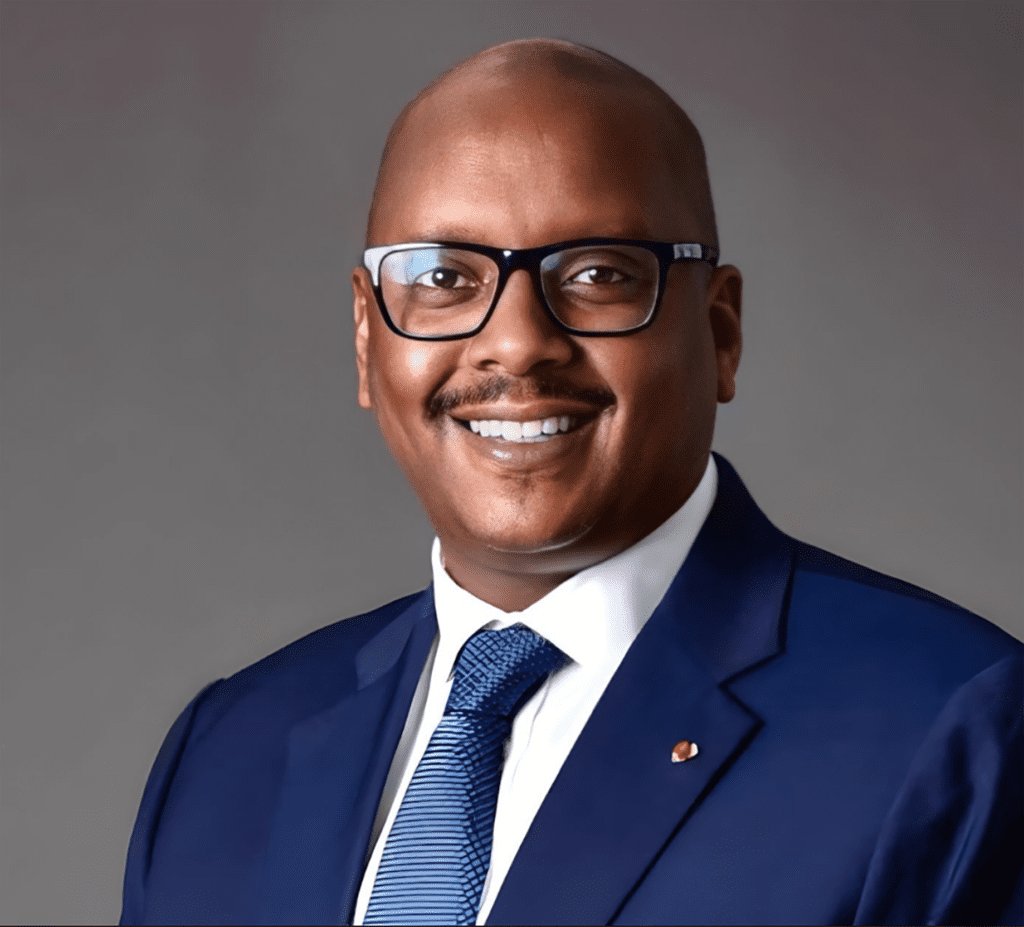
Political tensions have emerged in Burundi after former ambassador Frédéric Gateretse Ngoga publicly claimed that Tutsis in the country still face discrimination, sparking strong reactions from government officials and reopening sensitive debates about ethnicity, reconciliation, and governance in Burundi.
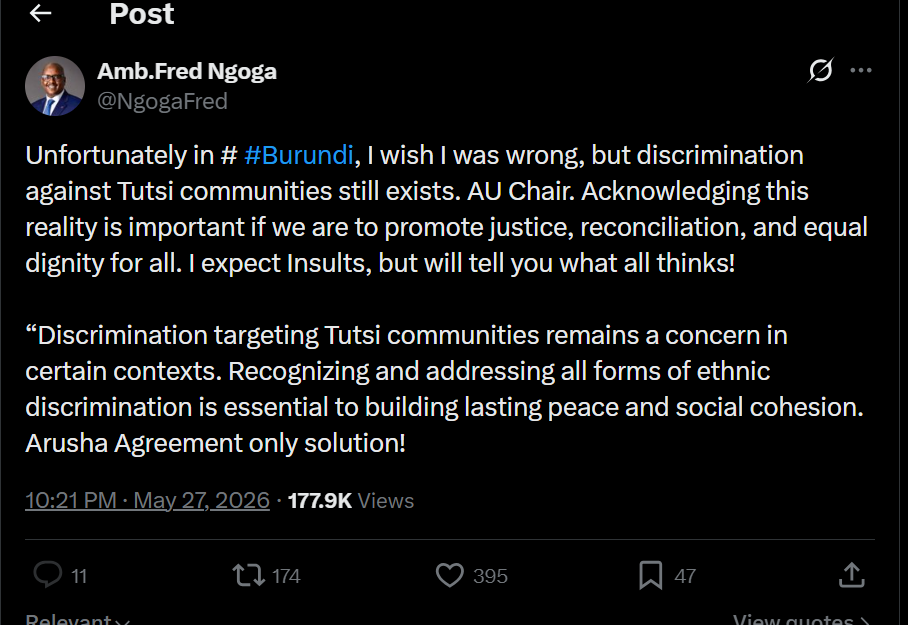
Ngoga, who currently works within the African Union Peace and Security Department, made the remarks on May 27, 2026, during discussions surrounding governance and inclusion in Burundi. His comments quickly spread across social media platform X and political circles across East Africa.
“The sad reality in Burundi, perhaps I may be mistaken, is that there is discrimination against Tutsis,” Ngoga stated. “Accepting this truth is important if we want to advance justice, reconciliation, and dignity for everyone.”
His remarks gained attention partly because Burundi currently holds the rotating chairmanship of the African Union under President Évariste Ndayishimiye. Ngoga argued that it was troubling for a country leading the continental body to still face accusations linked to ethnic discrimination and political exclusion.
Burundi’s Constitution and the 2000 Arusha Peace and Reconciliation Agreement created a power-sharing system designed to prevent ethnic domination after decades of conflict between Hutu and Tutsi communities. The system aims to guarantee representation for the country’s three main ethnic groups; Hutu, Tutsi, and Batwa within state institutions, parliament, the military, and government.
According to Burundi’s Constitution, the National Assembly must reflect ethnic balance. The constitution generally requires that 60% of members be Hutu and 40% be Tutsi, while at least three seats are reserved for the Batwa minority community. Women must also occupy at least 30% of positions in major institutions.
Ngoga acknowledged that his comments would likely attract criticism from fellow Burundians but insisted that confronting ethnic discrimination openly was necessary for long-term peace and national unity. He stressed that ignoring such issues would only deepen mistrust and political tensions.
His statements immediately triggered a response from Willy Nyamitwe, Burundi’s ambassador to the African Union and Ethiopia, who accused Ngoga of spreading false and divisive claims. Nyamitwe described the remarks as unprofessional and harmful to Burundi’s international image.
“You once again insulted our beloved country using serious accusations that are not based on truth,” Nyamitwe wrote in response on X.
The dispute also revived previous tensions between the two diplomats. Last year, they publicly clashed online after Congolese Foreign Minister Thérèse Kayikwamba Wagner referred to events in Burundi in 1994 as genocide against Hutus. Ngoga challenged that characterization, arguing that Burundi at the time was led by a Hutu president and that the historical situation was more complex than presented.
The controversy also comes at a time when Burundi is seeking to strengthen its regional and continental influence through its leadership role within the African Union. Observers believe the public disagreement between two senior Burundian diplomats may increase scrutiny over the country’s human rights and governance record in the coming months.
No comments yet. Be the first to comment!